
The simple guide to chess piece movement.
By the end, you’ll be able to make moves, capture pieces, and avoid common mistakes.
What We’ll Cover
How each chess piece moves and attacks
How to make strong attacks
How to fast-track your chess skills
The Pieces
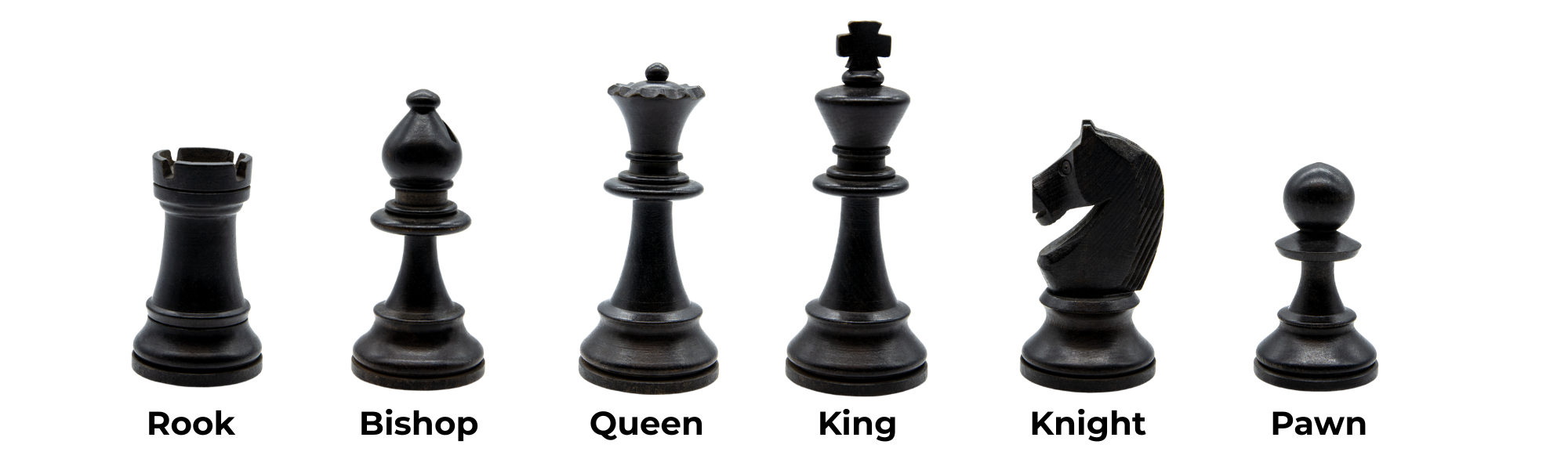

The Rook
How It Moves
Rooks are long-range logical pieces that move forward, backward, left, and right, as far as you want.
How It Captures
It attacks in the same direction it moves. Any of your opponent’s pieces that are in line with your Rook can be captured.
Can It Jump Over Pieces: No
Common Mistake
Many players own pawns block their Rooks from attacking their opponent. Avoid this by moving your Rooks so that they attack freely down the board.

The Bishop
How It Moves
Bishops are long-range snipers that attack on their diagonals. They can move forward, backward, left, and right along their slants.
How It Captures
Their range of attack is the same as their movement, so opponent pieces in line with them can be captured.
Can It Jump Over Pieces: No
Common Mistake
Bishops pushed too far are easy to attack. Keep your distance early in the game so you aren’t an easy target.

The Queen
How It Moves
The Queen is a powerhouse long-range piece and moves like both a Bishop and Rook combined.
It moves forward, backward, left, right, and along its diagonals.
How It Captures
It attacks in the same directions it can move. If your opponent’s pieces are in line with your Queen, they’re able to be captured.
Can It Jump Over Pieces: No
Common Mistake
Beginner players often get their Queen out too early, which leads to it getting captured. It’s better to get all of your pieces out and have them work together.

The King
How It Moves
Your King is a short-range piece that’s able to move one square in any direction, so long as not blocked by its own color pieces.
How It Captures
It attacks one square in any direction.
Can It Jump Over Pieces: No
Limitations
Kings are not able to step into any squares that enemy pieces attack. Because of this, Kings can never be next to each other because each King’s movement and attack range is 1 square surrounding them.
Common Mistake
Kings are never captured and taken off of the board. Checkmate ends the game immediately. Checkmate is a position where an opponent piece has moved to a square that threatens the King (called “Check”), but the King is not able to run to safety, block the attack, or capture the attacker.

How It Moves
Knights are unique mid-range pieces that move “over two, over one”.
Starting from a vertical or horizontal square around the Knight, count two squares up, down, left, or right. Then adjacent one square. (In the image, the Knight lands on the white circles.)
How It Captures
Knights capture only on the square they land on, not the pieces they jump over.
Can It Jump Over Pieces
YES! The Knight can jump over your pieces and your opponent pieces. It can’t land on squares your pieces occupy, though. It would be blocked.
Common Mistake
Beginner players struggle to see how their opponent’s Knights threaten their army. Get used to Knights by placing a Knight on an empty board and making moves until it becomes easy to see.

The Pawn
How Pawns Moves
Pawns are short-range pieces that each have the option to move one square or two squares on their first move.
After a pawn’s first move, it can only move forward one square at a time.
How Pawns Capture
Each pawn attacks one square forward diagonally in either direction. If your opponent’s pieces are on these squares, they can be captured, no matter how powerful they are.
That means a lowly pawn is able to capture a powerful Queen.
Can they Jump Over Pieces: No
Common Mistake
Pawns can’t capture pieces in front of them- that’s something beginner players often get wrong.
You Got This
You know how to move all the chess pieces!
Complete the action step below to keep your momentum going.
How to Make Strong Attacks
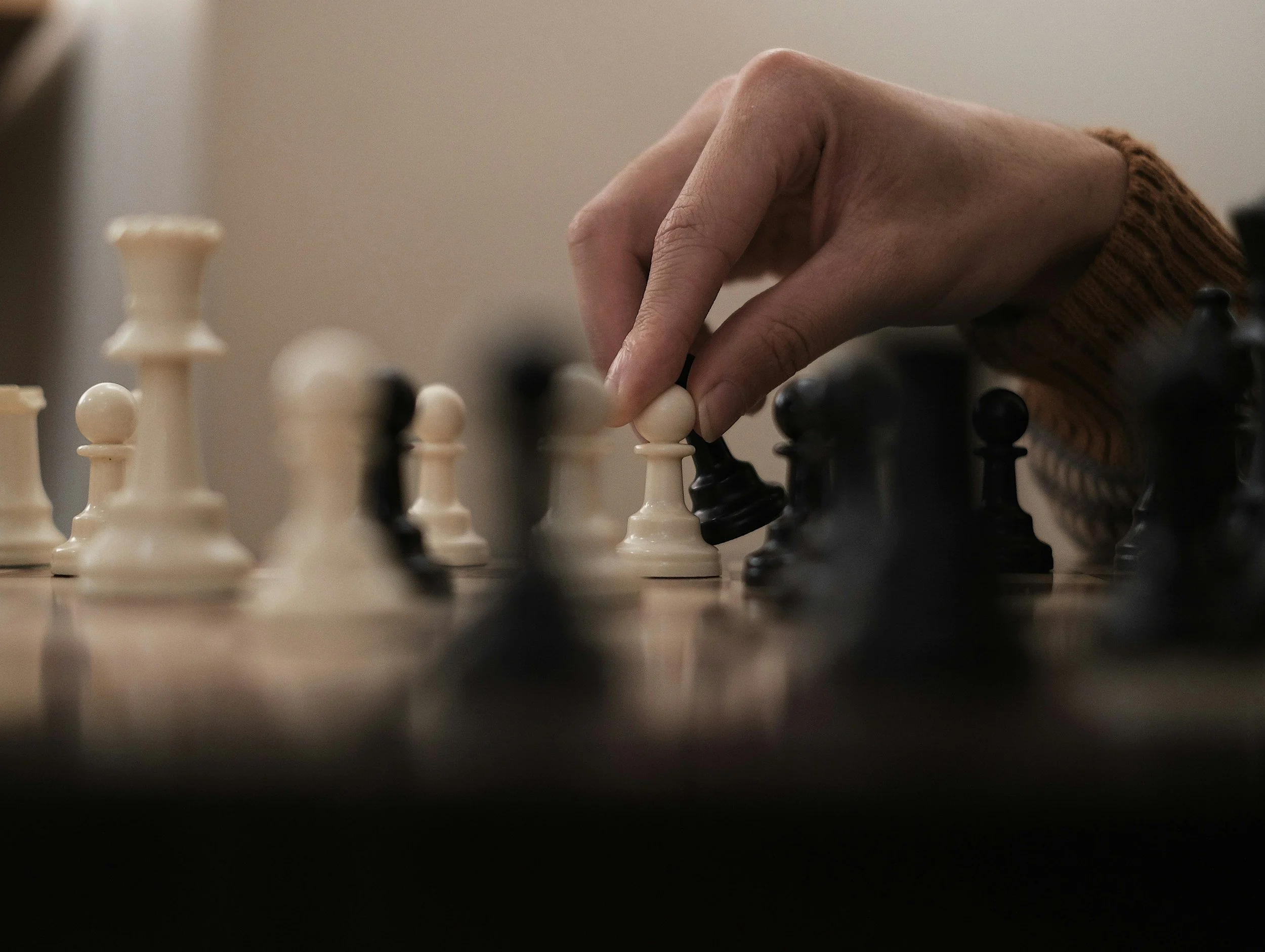
Beginner players think every capture they can make is a threat.
This isn’t exactly true.
If enemy pieces are protected by other pieces, then capturing them only invites a recapture of your piece. Before going capture-crazy, consider whether the action is worth doing. Not everything we can do we should do.
A good rule is to imagine the move you’re considering and see what your opponent can do at that point.
Action Step

Make 10 Moves
Get an online or physical chess board. Then put one piece in the center. From there make 10 moves in a row with that piece to practice its movement. Do the same with each piece.
This may sound silly, but this is the fastest way to solidify the movements in your mind.
You can also manually make captures with each piece to get familiar with the captures. This will help you identify options in your real games.
Need a New Chess Set?
Get 20% off orders over $150 from our affiliate partner House of Staunton.
